Brick and weatherboard houses take very different paint jobs. Weatherboard needs regular repainting, and most of the work is preparation: sanding, repairs, primer and two topcoats. Brick is stable and mostly needs cleaning, but once painted it has to be repainted for good, so it is a decision for the long term. This page explains how each surface is prepared, the paint systems used, the problems to look for, and how the price differs. For the full exterior process, see house repaints in Auckland.
Weatherboard
- Timber moves with heat and moisture
- Needs repainting as the paint wears
- Sanding, filling and rot repairs come first
- Bare timber takes a primer
- Two topcoats, low sheen on the boards
- Lead paint is likely on houses from before the 1980s
Brick
- Very stable, barely moves
- Unpainted brick never needs paint
- Cleaning is the main preparation
- Damp and salt marks must be fixed first
- A masonry paint made to breathe
- Once painted, it needs repainting for good
Should you paint a brick house?
Only if you are sure. Unpainted brick needs almost no maintenance, while painted brick needs repainting like any other painted wall, and paint is very hard to strip back out of the texture. Painting makes sense when the bricks are mismatched, stained or already painted. If they are sound and you like the colour, cleaning them is often enough.
How is brick prepared for painting?
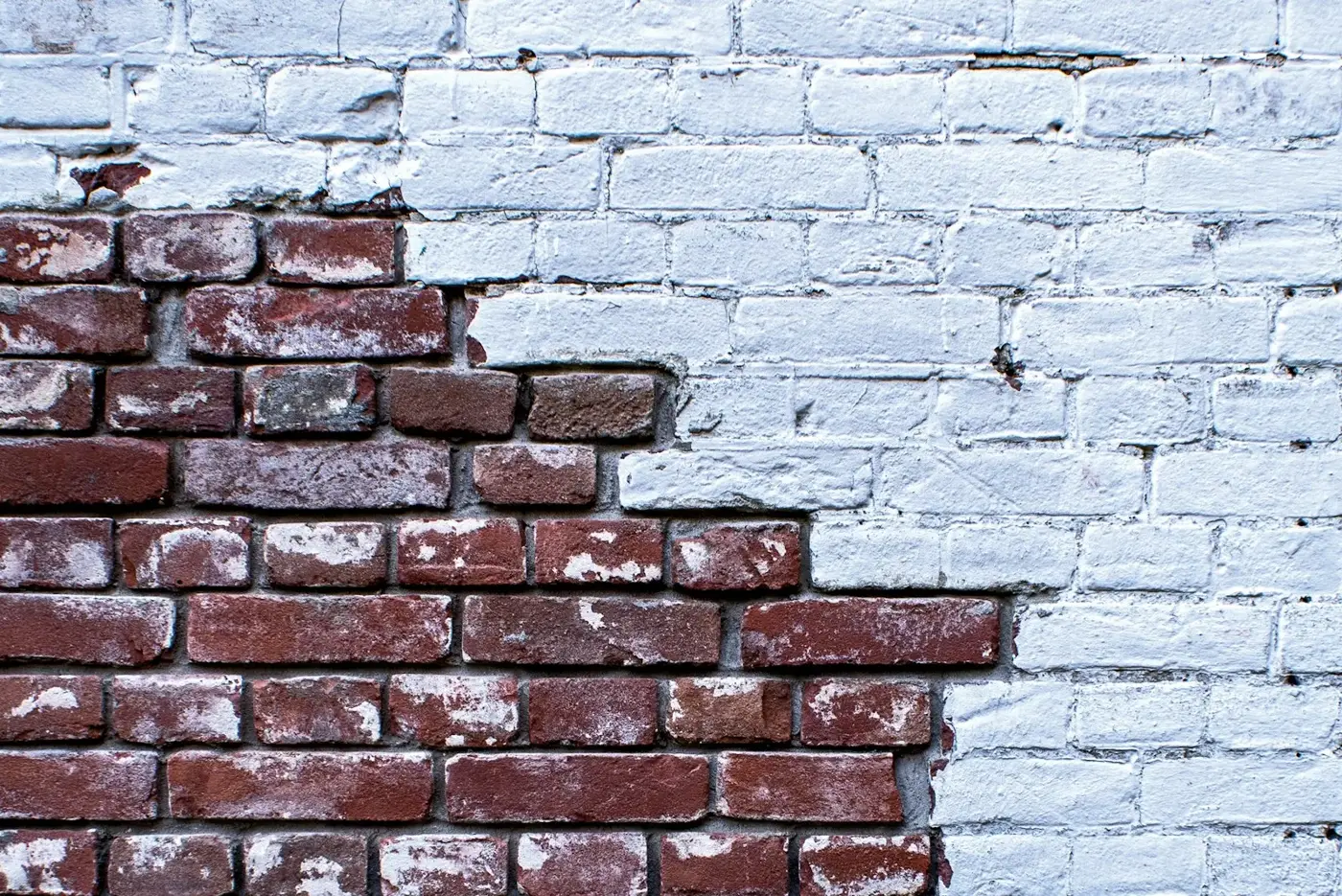
Brick is cleaned, checked for damp and repaired before any paint goes on. Loose mortar is raked out and repointed, cracks are filled, and any white salt deposits are dealt with. Then a masonry primer or sealer goes on, followed by two coats of an exterior paint made for masonry. The paint has to let moisture out, or it blisters.
The white powder you sometimes see on brick is efflorescence: salts carried out by water as the brick dries. Resene's advice is to fix the source of the moisture first, then remove the salts by scrubbing with a stiff brush and careful washing. Resene warns that water blasting can push more water into the wall and bring the efflorescence back.
How are weatherboards prepared for a repaint?
Weatherboards are washed, scraped and sanded back to sound paint, then repaired. Rotten sections are cut out and replaced, nail heads are punched and filled, and the gaps at board ends and around windows are sealed. Bare timber gets a primer. Then two topcoats go on, usually a low sheen exterior acrylic on the boards and gloss or semi-gloss on the trims.
Resene notes that the thin pre-primer on new boards is only a temporary holding coat, so new timber still needs a full primer. On weathered rough-sawn timber, Resene recommends its TimberLock treatment instead of sanding, then two topcoats.
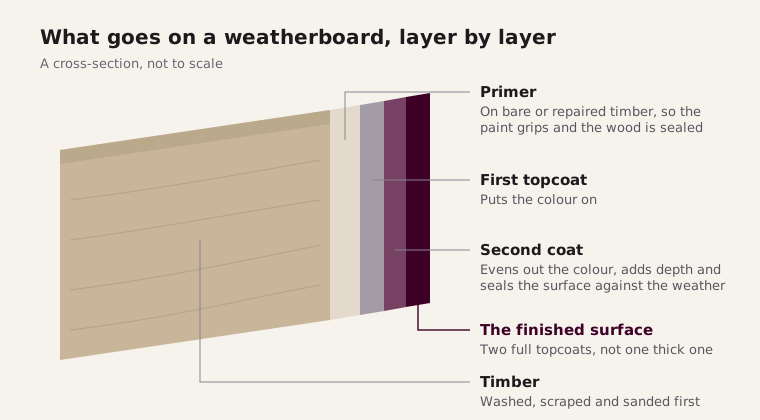
Each layer has a job. The primer grips the timber, the first topcoat builds the colour, and the second coat seals it against the weather.
What about villas and bungalows with lead paint?
Auckland villas and bungalows are usually weatherboard and often have decades of paint layers, some of them lead-based. Health New Zealand advises presuming lead paint on buildings from the 1980s or earlier until a test shows otherwise. BRANZ advises against power sanding, dry abrasive blasting, water blasting and open flames on lead paint.
Wet scraping, ground sheets, containment and careful disposal are used instead, which adds time and cost. A good quote says how lead is tested and handled. Heritage villas may also have colour or design controls, so check with Auckland Council before a big colour change.
What does painting a brick or weatherboard house cost?
Weatherboard repaints follow the usual published Auckland ranges: about $12,000 to $22,000 or more for a typical family home and $15,000 to $30,000 or more for a two-storey villa or bungalow, more where there is a lot of rot or lead paint. Brick has less preparation per square metre, but a first coat on bare brick needs a primer or sealer and two coats. Prices here are a guide and exclude GST: a GST-registered painter adds 15 percent on top.
Rot repair is the biggest variable on weatherboard, published at $150 to $400 or more per board section. See house painting prices in Auckland for all the extras.
FAQs
Can you paint over brick that has been painted before?
Yes. Previously painted brick is cleaned, loose or flaking paint is removed, cracks are filled, and the wall is repainted with a masonry paint. If the old paint is peeling in sheets, that usually means moisture is trapped behind it, and the cause needs fixing before the wall is repainted.
How long does weatherboard paint last?
It varies with the exposure, the colour and the preparation. Sunny north and west walls and houses near the coast wear fastest, and dark colours put more stress on the timber. Good preparation and two full topcoats make the biggest difference. Check the walls every spring and wash them once a year.
Is it cheaper to paint brick or weatherboard?
Brick usually needs less preparation, so it can be quicker per square metre once the wall is clean and sound. Weatherboard needs more sanding, filling and repairs. Painting bare brick for the first time takes extra product, because the first coats soak in. The quote depends on the condition of each wall.
Can a weatherboard house be painted in winter?
It can, but it is slower. Paint needs dry timber and mild temperatures to cure, and Auckland winters bring short days and heavy dew. Painters start later in the morning and finish earlier, so the job takes more days. Spring and autumn are the easiest seasons.